

Quality Services Guaranteed!

We’ll beat any legitimate quote!
What Are Pantry Moths?
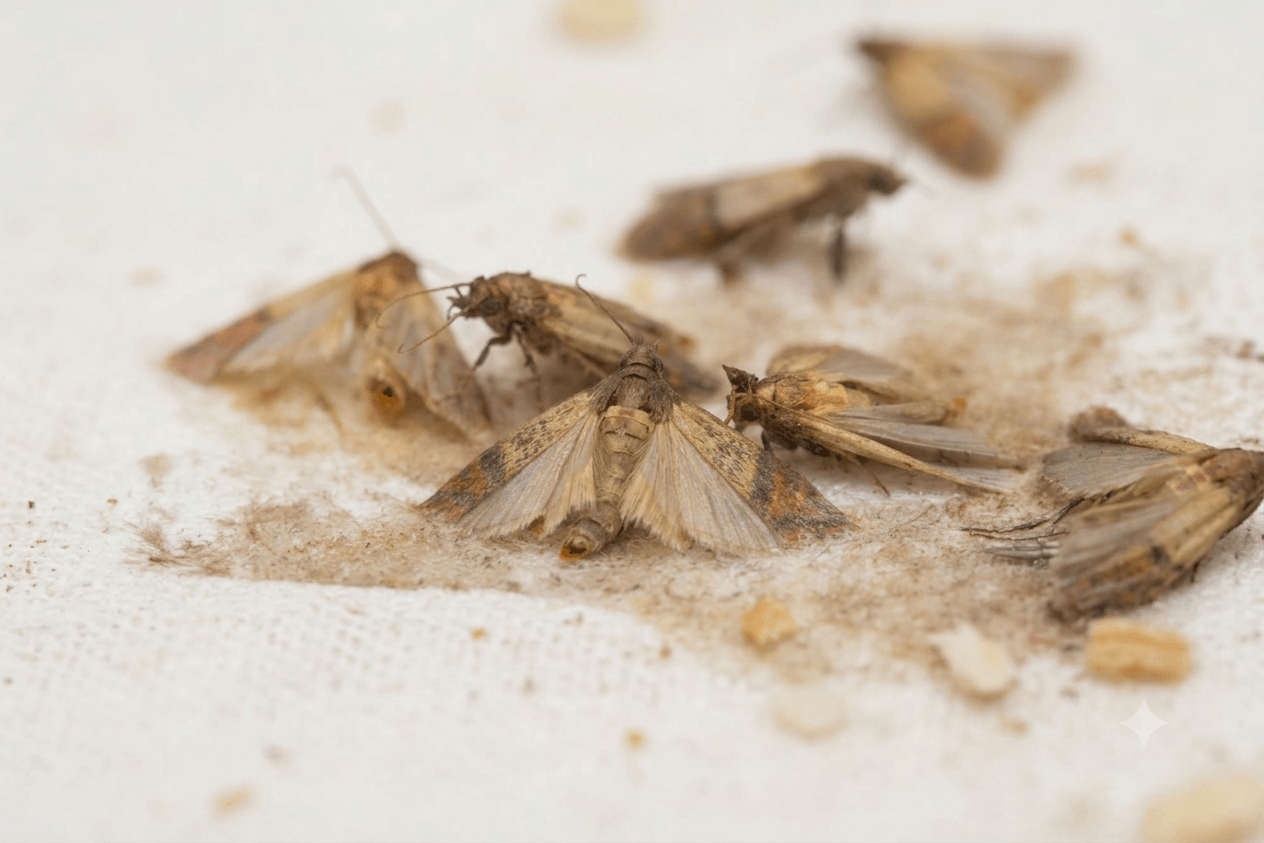
Pantry moths, commonly known as Indian meal moths, are small flying insects that infest stored food products. They are one of the most common pantry pests found in Australian homes and are usually introduced through contaminated packaged foods.
So, what do pantry moths look like? Adult pantry moths are small, brown-grey moths with bronze or copper-coloured wings. While the adult moths are annoying, the real problem comes from their larvae. Pantry moth larvae are small cream-coloured worms that feed on dry food products and leave behind webbing, silk threads, and contamination.
Common foods targeted by pantry moths include:
- Flour
- Rice
- Pasta
- Cereals
- Nuts
- Grains
- Dried fruit
- Pet food
- Bird seed
Once established, pantry moth infestations can spread rapidly throughout kitchen cupboards and storage areas.
What Causes Pantry Moths?
One of the most common questions homeowners ask is what causes pantry moths in the first place. In most cases, pantry moths enter homes through infested food packaging purchased from supermarkets or food suppliers. Even unopened products may already contain eggs or larvae.
Warm kitchens and poorly sealed food containers create the perfect environment for pantry moths to breed and multiply. Crumbs, expired food, and long-term food storage can also attract pantry pests.
Common causes of pantry moth infestations include:
- Storing dry food in original cardboard or plastic packaging
- Keeping expired pantry items
- Poor pantry hygiene
- Unsealed pet food or bird seed
- Hidden food spills inside cupboards
- Buying already infested food products
Understanding what causes pantry moths is the first step toward preventing future infestations.
Signs You Have Pantry Moths In Your Home
Pantry moth infestations often begin quietly before becoming obvious. Some common warning signs include:
Small Moths Flying Around The Kitchen
Adult moths are commonly seen flying near cupboards, ceilings, lights, and pantry areas, especially at night.
Webbing Inside Food Packaging
Fine silk webbing inside flour, cereal, rice, or grain products is a strong indicator of pantry moth activity.
Pantry Moth Larvae On Ceiling
Many homeowners notice pantry moth larvae on ceiling surfaces or walls. The larvae often crawl upward looking for a place to pupate before becoming adult moths.
Clumped Or Contaminated Food
Infested food may contain larvae, eggs, silk threads, or unusual clumping caused by feeding activity.
If you notice any of these signs, immediate treatment is recommended to stop the infestation from spreading.
How To Get Rid Of Pantry Moths
If you want to know how to get rid of pantry moths forever, thorough cleaning and treatment are essential. Simply killing adult moths will not eliminate hidden eggs and larvae.
Empty And Inspect Your Pantry
Remove every food item from your pantry cupboards. Carefully inspect both opened and unopened products for larvae, webbing, eggs, or contamination.
Pay close attention to:
- Flour
- Rice
- Pasta
- Nuts
- Cereals
- Pet food
- Baking products
Throw Away Infested Food
Any contaminated food should be sealed in a bag and disposed of immediately outside the home. Pantry moth eggs are often difficult to see, so heavily affected items should never be kept.
Vacuum Pantry Shelves Thoroughly
Vacuum all shelves, corners, hinges, cracks, and crevices to remove eggs and larvae hiding inside cupboard spaces.
Wash All Surfaces
Clean pantry shelves using warm soapy water or vinegar solutions. Proper cleaning helps remove remaining eggs, food residue, and moth pheromones.
Store Food In Airtight Containers
One of the best ways to keep moths out of pantry areas is by using airtight glass or sealed plastic containers for all dry goods.
Freeze Dry Goods Before Storage
Freezing flour, grains, nuts, and cereals for at least 48 hours can help kill hidden eggs before products are placed into storage.
How To Kill Pantry Moths Fast
When dealing with larger infestations, many homeowners look for an effective pantry moth killer. While DIY methods can help reduce activity, severe infestations may require professional treatment.
Common pantry moth killer options include:
- Pheromone moth traps
- Residual insecticide treatments
- Deep pantry cleaning
- Food disposal
- Professional pest control spraying
Pheromone traps can help capture adult moths, but they do not eliminate larvae hidden inside food products. For ongoing infestations, professional pest control is often the most reliable solution.
How To Get Rid Of Moth Larvae On Ceiling
One of the most unpleasant signs of infestation is discovering pantry moth larvae on ceiling areas or walls. These larvae crawl away from food sources to pupate before becoming adult moths.
If you are wondering how to get rid of moth larvae on ceiling surfaces, follow these steps:
- Vacuum visible larvae immediately
- Wipe surfaces thoroughly
- Inspect nearby pantry cupboards
- Remove infested food sources
- Apply appropriate pest treatments if necessary
Ceiling larvae usually indicate a well-established infestation, meaning hidden eggs and larvae are likely still present inside pantry products.
Do Pantry Moths Eat Clothes?
A common misconception is that pantry moths damage clothing. Many people ask, do pantry moths eat clothes? The answer is generally no.
Unlike clothing moths, pantry moths primarily feed on stored food products rather than fabrics. However, because both pests are moth species, they are often confused with each other.
If moth damage is appearing on clothing, carpets, or fabrics, you may be dealing with a separate clothing moth infestation rather than pantry moths.
How To Stop Pantry Moths From Coming Back
Learning how to stop pantry moths permanently requires ongoing prevention and good pantry hygiene.
How To Keep Moths Out Of Pantry Areas
- Use airtight food containers
- Clean pantry shelves regularly
- Dispose of expired food
- Store pet food properly
- Inspect groceries before storage
- Vacuum pantry corners frequently
How To Prevent Pantry Moths
Consistent pantry maintenance is the best defence against reinfestation. Preventative pest control treatments may also help protect homes with recurring pantry pest problems.
If infestations continue despite repeated cleaning, professional assistance may be necessary to fully eliminate hidden breeding sources.
How To Get Rid Of Pantry Moths Australia
Australian homes commonly experience pantry moth problems due to warm temperatures and year-round food storage conditions. If you are searching for how to get rid of pantry moths Australia homeowners can trust, professional pest control can provide safe and effective long-term treatment solutions.
At Knock-Down Pest Control, we provide targeted pantry moth treatments for homes and businesses across Sydney. Our experienced technicians identify infestation sources, eliminate hidden larvae and eggs, and help prevent future outbreaks.
Learn more about our pantry moth treatment services here: